


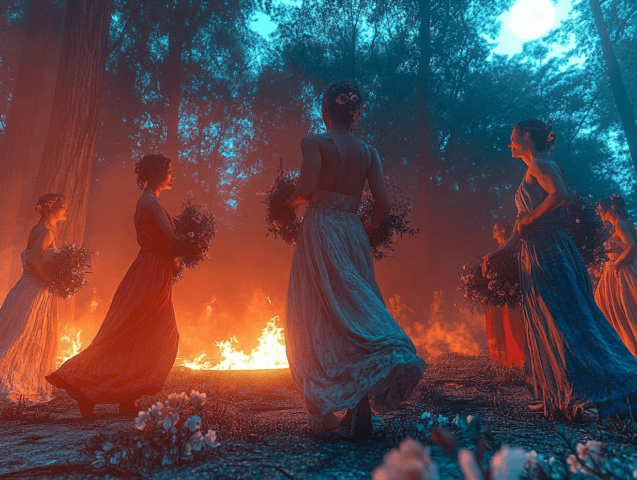
The solstices and equinoxes mark key points in Earth’s journey around the Sun. These moments offer opportunities to connect with nature’s rhythms, seek spiritual balance, and honor ancient traditions.
Understanding Solstices and Equinoxes
There are four significant events each year, each carrying deep spiritual meaning and being celebrated by different cultures around the world.
Spring Equinox (Ostara) – A Time of Renewal
Spiritual Meaning: The Spring Equinox represents balance, renewal, and fertility. It’s a time when day and night are equal, symbolizing harmony and new beginnings.
Traditional Celebrations:
- Wiccan and Pagan traditions celebrate Ostara, named after the Germanic goddess of fertility, Eostre.
- Persian cultures observe Nowruz, the Persian New Year, with cleansing rituals and feasting.
- In Japan, Shunbun no Hi is celebrated, honoring ancestors and nature.
Ritual Ideas:
- Plant seeds to symbolize personal and spiritual growth.
- Light green and yellow candles to welcome renewal energy.
- Balance eggs as a symbolic act of equilibrium.
Summer Solstice (Litha) – The Height of Light
Spiritual Meaning: The Summer Solstice is the longest day of the year, representing the peak of solar power, strength, and abundance.
Traditional Celebrations:
- Wiccans and Druids celebrate Litha, a festival of fire and fertility.
- In Scandinavia, Midsummer is honored with bonfires and dance.
- The Inca civilization observed Inti Raymi, the Sun Festival, in reverence to Inti, the Sun God.
Ritual Ideas:
- Watch the sunrise to absorb solar energy.
- Light a bonfire to honor the power of the sun.
- Perform a gratitude ritual to celebrate abundance.
Autumn Equinox (Mabon) – Gratitude and Reflection
Spiritual Meaning: The Autumn Equinox symbolizes the balance between light and dark, a time to express gratitude and prepare for introspection.
Traditional Celebrations:
- Wiccans honor Mabon, a festival of harvest and balance.
- The Chinese celebrate the Mid-Autumn Festival with mooncakes and gatherings.
- The Greeks honored Demeter, the goddess of the harvest, in the Eleusinian Mysteries.
Ritual Ideas:
- Write a gratitude list for the blessings of the year.
- Decorate your altar with autumn leaves, apples, and corn.
- Hold a small feast with family or friends to share your gratitude.
Winter Solstice (Yule) – The Return of Light
Spiritual Meaning: The Winter Solstice is the longest night of the year, symbolizing renewal, rebirth, and hope as the light slowly returns.
Traditional Celebrations:
- Pagans and Wiccans celebrate Yule, lighting candles and burning Yule logs.
- The ancient Romans held Saturnalia, a festival of merrymaking and gift-giving.
- Indigenous cultures honored the return of the sun with sacred ceremonies.
Ritual Ideas:
- Light a candle in a dark room to symbolize the return of the sun.
- Decorate with evergreens to honor nature’s endurance.
- Reflect on the past year and set intentions for the new cycle.
Aligning with Nature’s Cycles
Observing these celestial events allows us to connect with nature’s wisdom. Whether through rituals, meditation, or simple acts of gratitude, aligning with these cycles brings harmony to our spiritual path.


