


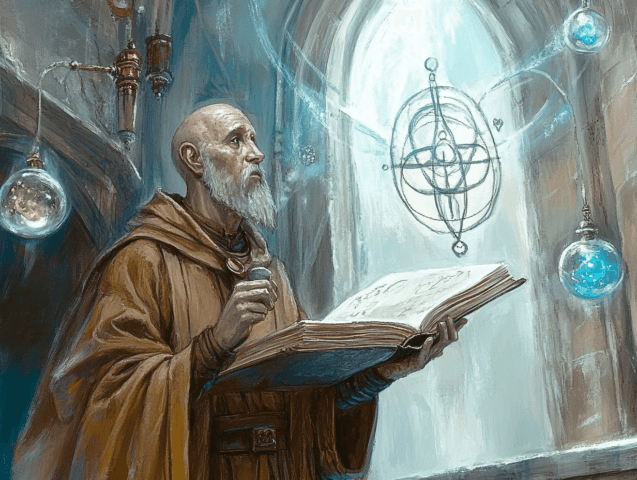
Alchemy has long been a bridge between science and spirituality. Originally a quest for material transformation, it evolved into a deeper pursuit of inner change and enlightenment.
Ancient Roots of Alchemy
Alchemy dates back to ancient Egypt, China, and Greece. Egyptian alchemists linked it to divine wisdom, while in China, Taoist alchemy focused on longevity and spiritual balance. Greek thinkers like Hermes Trismegistus influenced Western esoteric traditions.
Alchemy in the Middle Ages
In the medieval Islamic world, alchemy flourished. Scholars such as Jabir ibn Hayyan expanded chemical knowledge. European alchemists later sought the Philosopher’s Stone, believed to grant immortality and transmute base metals into gold.
The Spiritual Side of Alchemy
Beyond physical experiments, alchemy represents spiritual purification. The seven stages of alchemical transformation—calcination, dissolution, separation, conjunction, fermentation, distillation, and coagulation—mirror inner growth and self-realization.
Alchemy’s Influence Today
While modern chemistry emerged from alchemical practices, alchemy still influences spiritual traditions, psychology, and holistic healing. Carl Jung integrated alchemical symbols into psychology, viewing them as metaphors for personal transformation.


